


Proud Partner of
Michigan State Athletics
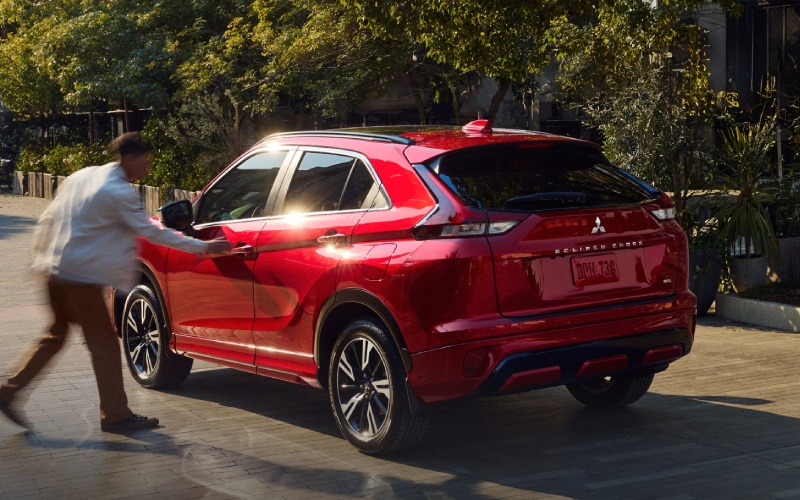
LaFontaine Mitsubishi Lansing – Which AWD gives Grand Ledge, MI drivers more confidence — S-AWC on Eclipse Cross or Real Time AWD on HR-V?
When shoppers ask which small SUV feels more secure in daily driving—Mitsubishi’s Super-All Wheel Control (S-AWC) on the Eclipse Cross or Honda’s available Real Time AWD on the HR-V—they’re really asking about predictability, traction, and how the system behaves during all the in-between moments. Those in-betweens are the slick intersections after a light drizzle, the slushy fringe in the center lane after a snowfall, and the gravel shoulders you use to swing a wider turn on a narrow side street around Grand Ledge, MI. Both systems are smart; both are designed for everyday confidence. The differences emerge when you feel the way S-AWC coordinates traction front-to-rear and side-to-side, and how the HR-V’s Real Time AWD focuses primarily on sending torque rearward when it senses slip.
LaFontaine Mitsubishi Lansing, serving Holt, Grand Ledge, and Charlotte, fields this question almost daily because our test routes include the same kind of mixed surfaces you drive on—worn two-lanes with patchwork paving, fresh asphalt on new arterials, and neighborhood streets where slush and leaves collect. Here’s a structured look at how each system works, what you notice at the wheel, and why Eclipse Cross owners often say S-AWC “just feels settled” when the road isn’t.
How The Systems Work
S-AWC is Mitsubishi’s integrated control system that manages yaw (vehicle rotation), wheel slip, and torque distribution with input from multiple sensors. It doesn’t just react to slip; it anticipates and stabilizes with subtle braking inputs and torque shifts designed to keep the vehicle tracking with your steering. Drive modes include Auto, Snow, and Gravel, giving you a simple way to tailor logic to the surface. On Snow, S-AWC smooths takeoffs and helps maintain directional stability; switch to Gravel, and the system prioritizes keeping momentum and steering clarity on loose, uneven surfaces.
Honda’s Real Time AWD with Intelligent Control System is a responsive, on-demand setup that monitors front wheel slip and allocates rear torque when needed. It pairs well with the HR-V’s Snow mode and Hill Descent Control to add driver confidence in winter and on steep grades. The benefit is straightforward traction when conditions degrade. The difference is that Real Time AWD primarily transitions between front-drive and an engaged rear axle, where S-AWC continuously balances forces to influence how the vehicle rotates and grips through and after the slip event.
What You Feel From The Driver’s Seat
On a glossy, rain-slick turn, S-AWC tends to keep the Eclipse Cross precisely on the line you set with the wheel. The system’s torque-vectoring logic and selective braking can quietly trim understeer and maintain pace without drama. On mushy, mixed-surface snow—say, after a municipal plow has made a first pass—Snow mode helps the Eclipse Cross ease off from a stop without abruptness and stabilize quickly as speeds build.
The HR-V’s Real Time AWD delivers an immediate sense of traction when a front tire spins. You feel the rear engage and the vehicle push forward with better balance than front-drive alone. It handles low-friction starts well, and Snow mode reduces throttle sensitivity so you don’t overwhelm available grip. Where drivers tend to notice the distinction is mid-corner or on staggered patches of slush and grit. The Eclipse Cross often needs fewer steering corrections, while the HR-V may ask for just a bit more input to follow the intended arc.
Everyday Use Cases Around Town
- Icy morning intersections: Eclipse Cross in Snow mode eases off the line and feels calmly centered; HR-V engages rear torque quickly to get you moving without spin.
- Gravel shoulders or unpaved drives: Eclipse Cross in Gravel mode holds momentum with deliberate torque and yaw control; HR-V maintains traction but can require more careful throttle on loose stones.
- Wet highway merges: Eclipse Cross keeps its lane position steady with subtle corrections you hardly notice; HR-V feels composed but may need a touch more steering correction if the surface is patchy.
Safety and Tech That Support Traction
Grip is only part of confidence. The Eclipse Cross layers in Forward Collision Mitigation (FCM) with Pedestrian Detection and available Blind Spot Warning (BSW) with Lane Change Assist (LCA) and Rear Cross Traffic Alert (RCTA), plus an available Multi-View Camera System to make low-speed maneuvering easier in tight downtown lots. HR-V brings Honda Sensing with Collision Mitigation Braking System (CMBS), Road Departure Mitigation (RDM), Adaptive Cruise Control (ACC) with Low-Speed Follow, and Lane Keeping Assist System (LKAS), with Blind Spot Information System and Cross Traffic Monitor on Sport and EX-L. Both lineups do the fundamentals right; Eclipse Cross simply adds an extra layer of camera coverage and standardizes AWD across trims.
Long-Term Confidence
Mitsubishi backs the Eclipse Cross with a 10-year/100,000-mile Powertrain Limited Warranty and standard 2-Year/30,000-Mile Limited Maintenance. That coverage dovetails with what buyers want from an all-weather SUV—traction up front, value that lasts, and service that keeps the vehicle feeling tight and quiet. The HR-V carries Honda’s strong reputation for durability and the driver-assist confidence of its standard suite. If you spend a lot of time transitioning between dry, damp, slushy, and gravelly surfaces, S-AWC’s broader control strategy is what you’ll likely feel most day to day.
Test It Where You Drive
The best way to decide is to test both on the same route, in the same conditions. Ask to include a few rolling corners, a stop on a slight incline, and a stretch with mixed surface texture. Bring the same number of passengers and a bit of cargo. Noting how each SUV reacts in those specific spots will tell you more than any spec sheet. And if you can try Snow and Gravel modes on the Eclipse Cross, do it—you’ll feel how the system’s personality changes with the route.
Frequently Asked Questions:
Does S-AWC help only in winter, or is it useful year-round?
S-AWC enhances control in all seasons. On dry roads you’ll notice steadier cornering and fewer mid-corner corrections; in rain, snow, or on gravel, it adds traction and directional stability.
Is Real Time AWD enough for typical Michigan commutes?
For many drivers, yes. It engages the rear wheels when slip is detected and works well with the HR-V’s Snow mode. If you often drive on mixed or loose surfaces, S-AWC’s broader control can feel more reassuring.
Can I tow with these SUVs?
The Eclipse Cross is rated to tow up to 1,500 pounds when properly equipped. The HR-V is not rated for towing in U.S. models.
How can I compare both systems on a test drive?
Request the same loop for both vehicles, including a few tight corners, a rougher side street, and a highway merge. Try Eclipse Cross modes—Auto, Snow, and Gravel—where appropriate to feel the differences.
If you’re ready to compare traction feel and everyday comfort back-to-back, schedule time with our team to drive both systems on the same roads you use every day. One loop usually makes the choice clear.
Request more 2026 Mitsubishi Eclipse Cross information

